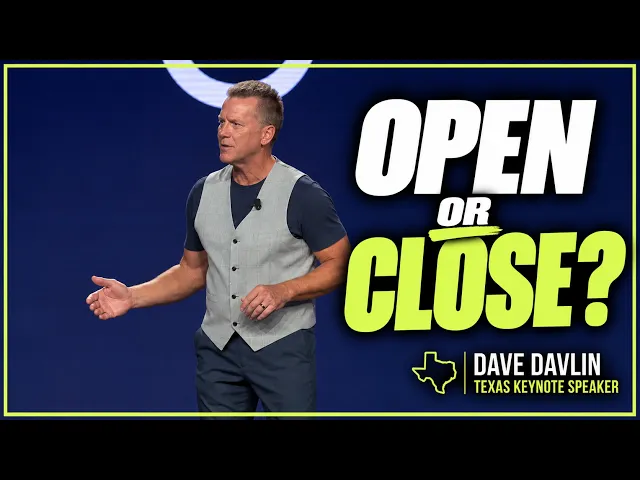
Opening Keynote vs. Closing Keynote: Which Does Your Conference Need?
If your conference budget allows for one professional keynote speaker, where should you invest that money?
At the beginning of your conference? Or at the end?
It's an important question for association executives, corporate event planners, and conference organizers throughout Texas.
My recommendation? Most of the time, I'd invest in the opening keynote.
But not always.
The best choice depends on what you want the keynote speaker to accomplish—not just during their presentation, but throughout the entire conference.
Why an Opening Keynote Often Delivers Greater Value
A great opening keynote has something working in its favor: leverage.
Think about what happens when attendees first arrive at a conference.
Some know each other. Others are attending for the first time. Some are excited to be there, while others are still thinking about the work and responsibilities they left behind.
An effective opening keynote can change the atmosphere in that room.
When a speaker gets people laughing together, thinking together, and perhaps even participating together, something important begins to happen.
People loosen up. Conversations become easier. Attendees develop a shared experience.
And that experience doesn't necessarily end when the keynote does.
It can influence conversations in the hallways, connections made over lunch, interactions at breakout sessions, and the overall energy of the conference.
That's why I often encourage planners to think of an opening keynote as more than an hour of entertainment or inspiration.
It's an opportunity to establish the emotional tone for everything that follows.
When a Closing Keynote Makes More Sense
There are circumstances when the closing keynote is the better investment.
Perhaps your conference already begins with a high-energy general session, an exciting announcement, an awards celebration, or a compelling presentation from your organization's leadership.
In that case, you may not need an outside speaker to create momentum at the beginning.
Instead, a closing keynote can help attendees reflect on what they've experienced and leave with a renewed sense of purpose.
A great closing speaker can bring the conference's messages together and answer an important question:
What will attendees do differently when they return home?
A closing keynote can also be valuable when you want to finish with a memorable emotional experience rather than simply ending with announcements and goodbyes.
There is one practical consideration, however.
Attendance sometimes declines toward the end of a multi-day conference as people leave early to catch flights or return to work.
Before investing in a closing keynote, make sure your schedule gives that speaker the audience and attention the experience deserves.
The Question I'd Ask Before Making the Decision
Rather than beginning with “Should we hire an opening or closing keynote speaker?” I'd start with a different question:
What do we want people to experience—and what do we want them to carry away?
If your priority is to create connection, energy, and a shared sense of purpose that influences the entire conference, I'd lean toward the opening keynote.
If your priority is to bring everything together, reinforce your conference's message, and send attendees home inspired to act, the closing keynote may be the stronger choice.
Neither position is automatically better.
The right choice depends on the result you're trying to create.
Don't Just Buy an Hour
When you're investing in a professional keynote speaker, you're not simply purchasing 45 or 60 minutes on the agenda.
You're investing in what those minutes can make possible.
The best keynote experiences do more than fill a time slot. They create moments people remember, conversations that continue, and ideas that influence what happens after the conference.
So whether you choose an opening or closing keynote, remember this:
Don't buy an hour. Buy what that hour can do.
Dave Davlin is a Texas-based professional keynote speaker whose signature presentation, The Game-Winning 3: Remember What Matters. Live for What Matters Most., helps conference audiences reconnect with purpose, impact, and what matters most.
Learn more about bringing Dave to your next Texas conference at https://davedavlin.com/Texas.